
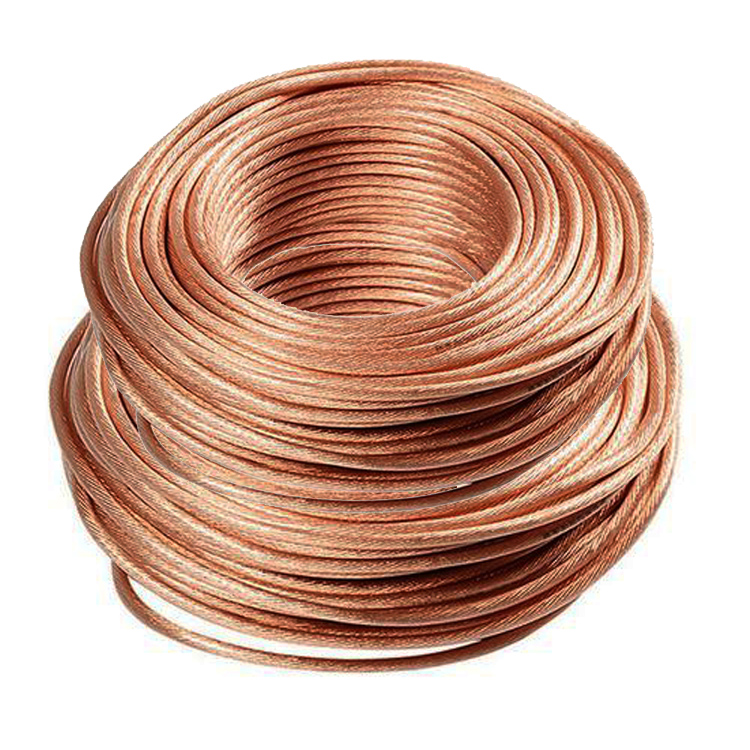
UL 467 copper-clad ground rod with 0.254 mm copper layer and steel core, the SKU most procurement teams quote first when bidding for North American utility programs.
Why procurement teams ask this question in the first place
Most of the buyers who write to us about ground rods are running programs that ship the same product family to both North American and European projects, which means the import specification has to defend itself against two compliance regimes at once. UL 467 governs the North American side; IEC 62561-2 (and its European adoption EN 62561-2) governs the European side. In the US, the National Electrical Code (NFPA 70), Article 250 mandates grounding electrode systems that reference UL-listed ground rods; in Europe, NFPA 780 and its IEC equivalent govern lightning protection grounding. A specification that names only one of the two leaves either side of the program without a defensible compliance anchor, and the audit trail breaks the moment a customs broker or a project inspector asks which standard the rod was tested against. The two standards do not substitute for one another, so the procurement question is not “which one is enough” but “which one do I cite for which leg of the program”.
The frequency pattern we see. In our 17 years of producing copper-clad ground rods at the Xinchang facility, the buyers who ask the UL-vs-IEC question fall into three groups. Group one: utility procurement teams bidding for North American distribution utility programs, who already cite UL 467 and want to know whether the same rod also covers European export. Group two: solar farm and wind farm EPCs bidding for European renewable energy projects, who already cite IEC 62561-2 and want to know whether the same rod is also valid for North American interconnection. Group three: industrial OEM and telecom infrastructure buyers who run hybrid programs and need both certifications on the same SKU. The three groups converge on the same procurement question but arrive from different compliance starting points.
What the wrong answer costs. A procurement specification that cites the wrong standard on the wrong leg of a hybrid program generates a compliance defect that surfaces at customs clearance, at site acceptance testing, or at the warranty audit. Customs clearance delays on a 40HQ container of grounding hardware can run 5-10 working days and add demurrage cost; site acceptance test failures on a substation or wind farm can push back commissioning by weeks; warranty audit findings can force a re-test program at the buyer’s expense. The OSHA construction electrical standard (29 CFR 1926.404) requires grounding per NEC and UL-listed equipment, which means non-compliant rods on a US job site can trigger enforcement action in addition to project delays. None of these costs is recoverable from the supplier after the fact — they all sit on the buyer’s side of the ledger, which is why the procurement specification has to be defensible before the PO is signed.
Five-axis comparison: UL 467 vs. IEC 62561-2
The table below is the procurement-side summary we walk new buyers through. Each axis covers a different procurement decision and points to a different document in the certification dossier. Since the comparison is dense, I have kept each cell short and linked the underlying definitions to the issuing body’s published scope page so the buyer can verify directly.
| Axis | UL 467 (North America) | IEC 62561-2 (International / EN 62561-2 in EU) |
|---|---|---|
| 1. Issuing body | UL Solutions (formerly Underwriters Laboratories), a Nationally Recognized Testing Laboratory (NRTL) in the US and a recognised certification body in Canada. | International Electrotechnical Commission (IEC); in the EU, adopted as EN 62561-2 by CENELEC; CE marking under the EU Construction Products Regulation 305/2011. |
| 2. Product scope | Bonding and grounding hardware including ground rods, bonding devices, grounding clamps, and grounding bushings. Focused on the hardware itself. | Lightning protection system components — specifically Part 2 covers earth electrodes (rods, plates, conductors) and their connection to the air-termination down-conductor system. |
| 3. Test methodology | Adhesion tests, mechanical pull-out tests, current-cycle tests, and corrosion resistance per UL 467 Section 8-12. Copper layer thickness verified against the rod’s declared specification. | Mechanical tests (bending, tensile), hammer impact, environmental ageing per IEC 62561-2 Section 6.3-6.4, and corrosion resistance per IEC 60068-2-52 salt mist testing. |
| 4. Acceptance criteria | Bond integrity after mechanical load, no copper fracture after 90-degree bend at 100 mm radius (a key UL 467 acceptance point for copper-clad steel rods), and current carrying compliance. | Mechanical integrity after environmental ageing, declared corrosion resistance class, and verified electrical continuity between the electrode and the down-conductor system. |
| 5. Procurement documentation | UL Listing card, follow-up service listing on ul.com, and a manufacturer’s Declaration of Conformity referencing UL 467. | IEC test report from an IEC CB scheme laboratory, EN 62561-2 Declaration of Conformity for EU projects, and CE marking documentation under EU Regulation 305/2011. |
The five axes diverge on certification body, scope, test method, acceptance criteria, and documentation, which turns the procurement question into a checklist of five separate answers rather than a single yes/no. A rod can pass UL 467 and still fail IEC 62561-2 if the salt mist test does not meet the IEC acceptance band; a rod can pass IEC 62561-2 and still need a separate UL 467 audit if it is shipping into a North American utility program. The two certifications are issued by different bodies and they do not substitute for one another.

The five procurement decisions driven by this comparison
Decision 1: What is the program destination? If the program is 100% North American utility or telecom infrastructure, cite UL 467 in the import specification and verify the rod’s UL Listing card on the UL Product iQ database. If the program is 100% European (renewable energy, telecom, building services), cite EN 62561-2 and verify the CE Declaration of Conformity. If the program is hybrid — shipping the same SKU into both markets — cite both and verify both certifications independently. This is the single biggest procurement decision; the next four decisions follow from it.
Decision 2: Does the rod have a single certification or dual certification? A single-certified rod covers one of the two standards. A dual-certified rod covers both, but only after independent testing by both an NRTL for UL 467 and an IEC CB scheme laboratory for IEC 62561-2. Dual-certified rods carry a premium for the additional testing cost, but the premium is recovered in the procurement efficiency of running a single SKU across both markets. The buyer’s question to the supplier is whether the rod SKU on offer carries one certification or two, and what the certification numbers are.
Decision 3: What is the copper layer thickness specification? UL 467 references the bonding and current-carrying criteria rather than specifying a single thickness value; the 0.254 mm copper layer (10 mil) is a common commercial specification that aligns with the IEC minimum and is widely used in North American utility procurement. IEC 62561-2 specifies a minimum copper layer thickness of 0.25 mm for solid copper-bonded steel earth rods. A 0.254 mm copper layer (which is 0.004 mm above the IEC minimum) is a defensible specification on both sides. For utility substation projects that reference IEEE 80 (Safety in AC Substation Grounding), the ground rod copper thickness and mechanical strength must satisfy both the IEEE design standard and the applicable product certification (UL 467 or IEC 62561-2); for industrial and commercial installations, IEEE 142 (Grounding of Industrial and Commercial Power Systems) provides the grounding electrode design framework that UL-listed rods are expected to meet. Buyers who specify the rod SKU on our UL copper ground rod product page are typically running North American utility or hybrid programs; buyers who specify the SKU on our copper-coated earth rod page are typically running European renewable energy projects.
Decision 4: What is the certification dossier format? The UL 467 dossier is a UL Listing card plus a manufacturer’s Declaration of Conformity referencing UL 467. The IEC 62561-2 dossier is an IEC CB scheme test report plus an EN 62561-2 Declaration of Conformity plus a CE marking declaration for EU projects. A hybrid program needs both dossiers in parallel, and the procurement specification should name both. The supplier’s quotation should reference both certification numbers in the offer letter; if only one is named, the buyer should ask for the other before signing the PO.
Decision 5: Who pays for the second certification? On a hybrid program where the supplier’s existing rod SKU is single-certified (most often UL 467, since UL is the more common starting point for North American exports from China), the second certification (IEC 62561-2) is a separate test program with its own cost. The buyer and supplier have to negotiate who pays. The typical split is buyer-pays if the certification becomes a programme asset (the buyer owns the test report and can use it for future SKUs); supplier-pays if the certification is treated as a supplier-side capability investment. Both structures are commercially reasonable; the negotiation should happen at the quotation stage rather than after the PO is signed.
Decision flowchart for hybrid import programs
The flowchart below walks a hybrid-program buyer through the decisions above in a single linear path. The path assumes the buyer has already identified a candidate supplier and is now writing the import specification; if the supplier has not yet been identified, the flowchart starts at “candidate supplier identified” rather than at the top.
- Step 1: Confirm the program is hybrid. If the program ships 100% to one market, the flowchart does not apply — cite the single applicable standard and verify the certification. If the program is hybrid, proceed to step 2.
- Step 2: Ask the supplier for the existing certification dossier. Most Chinese copper-clad ground rod suppliers carry UL 467 (because of the historical North American export orientation); some also carry IEC 62561-2 (because of the renewable energy export growth). Request the existing dossier and identify which standard is missing.
- Step 3: Quote the missing certification. If the missing certification is IEC 62561-2, request a separate quote for the IEC CB scheme test program. The test program typically covers salt mist ageing, mechanical impact, and a Declaration of Conformity to EN 62561-2. Typical cost runs USD 3,000-8,000 depending on the test laboratory and the number of follow-up test cycles.
- Step 4: Negotiate the certification cost split. Decide who pays for the second certification. The buyer’s leverage is the program volume; the supplier’s leverage is the existing test infrastructure. A typical split on a first-time hybrid program is 50/50 or buyer-pays in exchange for ownership of the test report.
- Step 5: Write the import specification with both standards cited. The specification should reference both UL 467 and IEC 62561-2 (or EN 62561-2 for EU projects) and require both certification numbers in the offer letter and the conformity documentation at shipment.
- Step 6: Run a dual pre-shipment inspection. The pre-shipment inspection should verify both certification numbers on the rod packaging, the certification dossier, and the Declaration of Conformity. A single-inspection protocol that covers both standards saves time at the supplier’s facility.
Hybrid programs are common and the certification cost is recoverable across the program volume, so the recommendation for most hybrid-program buyers is to dual-certify early and to negotiate the cost split at the quotation stage rather than after the PO is signed.
Common specification mistakes we see in hybrid RFQs
Five recurring specification mistakes arrive on hybrid RFQs from buyers who are writing the import specification for the first time. Each is fixable in a 30-minute conversation with the supplier, but each can cascade into a customs or site-acceptance failure if left unaddressed.
Mistake 1: Citing only UL 467 on a hybrid program. The RFQ specifies UL 467 compliance and does not mention IEC 62561-2. The European leg of the program then arrives at customs without a CE Declaration of Conformity and is held until the buyer provides additional documentation. Fix: cite both standards explicitly in the RFQ and require both certification numbers in the offer letter.
Mistake 2: Treating CE marking as the same as IEC 62561-2 compliance. CE marking is a regulatory declaration under EU Regulation 765/2008 that references the relevant EN standard; IEC 62561-2 is the international standard that EN 62561-2 adopts. A rod that is “CE marked” without an EN 62561-2 Declaration of Conformity does not necessarily comply with IEC 62561-2. Fix: request the EN 62561-2 Declaration of Conformity specifically, not just the CE mark.
Mistake 3: Specifying a copper layer thickness below the IEC minimum. Some North American utility buyers specify 0.10 mm (4 mil) copper layer for cost reasons. The IEC 62561-2 minimum is 0.25 mm; a 0.10 mm rod will pass UL 467 in some configurations but will not pass IEC 62561-2. Fix: specify 0.254 mm (10 mil) copper layer for hybrid programs — it satisfies both standards.
Mistake 4: Accepting a single certification dossier for a hybrid shipment. The supplier provides a UL 467 dossier for a hybrid shipment and treats the European leg as covered by association. The European leg is not covered by association; it requires a separate EN 62561-2 / CE Declaration of Conformity. Fix: require both dossiers in the import specification and verify both at pre-shipment inspection.
Mistake 5: Skipping the dual pre-shipment inspection. The buyer runs a single inspection that verifies the UL Listing and assumes the IEC compliance is in order. The IEC compliance is verified by a different document set and should be inspected independently. Fix: run a dual pre-shipment inspection protocol that covers both certification sets.
What Jane Yang tells every hybrid-program buyer
If you are writing an import specification for a copper-clad ground rod program that ships into both North American and European projects, the five decision dimensions are program destination (North America / Europe / hybrid), existing certification coverage on the candidate supplier (single vs dual), copper layer thickness specification (0.254 mm is the defensible default for both standards), certification dossier format (UL Listing card + Declaration of Conformity for UL 467, IEC CB test report + EN 62561-2 Declaration of Conformity + CE marking for IEC 62561-2), and certification cost split (buyer-pays vs supplier-pays vs 50/50). The decision flowchart above walks through all five; the common specification mistakes section flags the five recurring RFQ errors that delay hybrid programs.
For hybrid programs, the procurement specification should cite both UL 467 and EN 62561-2 (or IEC 62561-2 for international projects outside the EU), and the supplier’s offer letter should reference both certification numbers. A 0.254 mm copper layer rod that is dual-certified to both standards is the most common commercial specification that satisfies the comparison on both sides; at Xinchang Shibang we maintain dual certification on our UL copper ground rod SKU and the ISO 9001 copper earth rod SKU, with the test reports available on request for both. Buyers who are running renewable energy projects in Europe typically cite EN 62561-2 on our copper-coated earth rod product page; the copper-clad category at copper-clad ground rod covers the broader product family for utility and telecom infrastructure buyers.
For hybrid-program procurement support on a specific RFQ, reach me through the company contact page or via Facebook, LinkedIn, or X. I respond to hybrid-program RFQs within one working day; for buyers running a first-time hybrid program, I typically run a 30-minute scoping call to align the certification strategy before the quotation stage.
FAQ — UL 467 and IEC 62561-2 for Copper-Clad Ground Rod Procurement
1. Is UL 467 the same as IEC 62561-2?
No. UL 467 is the North American bonding and grounding product standard administered by UL Solutions as a Nationally Recognized Testing Laboratory; IEC 62561-2 is the international lightning protection system component standard administered by the IEC. They cover different product scopes (UL 467 focuses on bonding and grounding hardware; IEC 62561-2 focuses on earth electrodes and earth-rod assemblies for lightning protection), run different test methods (UL 467 adhesion and pull-out tests vs IEC 62561-2 mechanical and environmental ageing tests), and have different acceptance criteria. A rod that passes UL 467 does not automatically pass IEC 62561-2.
2. Can a copper-clad ground rod be dual-certified to UL 467 and IEC 62561-2?
Yes, but only if the rod is independently tested by an NRTL for UL 467 and by an IEC CB scheme testing laboratory for IEC 62561-2. The two certifications are issued under separate certification bodies and do not substitute for one another. A dual-certified rod carries the UL Listing mark and the IEC CB test report in parallel; the procurement documentation should reference both.
3. Which standard applies to a hybrid import program shipping rods to both the US and the EU?
For a hybrid program, the import specification should cite both standards and the rod should be tested against both. Many procurement teams in this situation write a hybrid specification that references UL 467 for the North American leg and IEC 62561-2 (or EN 62561-2 for EU projects) for the European leg, with a single rod SKU and a single certification dossier covering both test reports.
4. What copper layer thickness does IEC 62561-2 require for a steel-cored earth rod?
IEC 62561-2 specifies a minimum copper layer thickness of 0.25 mm for solid copper-bonded steel earth rods. UL 467 references the bonding and current-carrying criteria rather than specifying a single thickness value; the 0.254 mm copper layer is a common commercial specification that aligns with the IEC minimum and is widely used in North American utility procurement.
5. Is CE marking the same as IEC 62561-2 compliance?
No. CE marking is a regulatory declaration under EU Regulation 765/2008 covering a wide range of products, including lightning protection system components under EN 62561-2 (the European adoption of IEC 62561-2). The CE mark on a ground rod refers to compliance with the relevant EN standard; the IEC 62561-2 standard itself is not a CE declaration. A buyer who needs CE-marked rods for European projects should request the Declaration of Conformity referencing EN 62561-2 rather than asking for IEC 62561-2 alone.
6. How long does UL 467 and IEC 62561-2 dual certification take for a new SKU?
From initial sample submission to certificate issue, dual certification typically takes 8-14 weeks depending on laboratory backlog and the number of follow-up test cycles. Programs that run UL and IEC tests in parallel can compress to 8-10 weeks; sequential programs run 12-14 weeks.
7. What happens if a ground rod fails the IEC 62561-2 salt mist test?
If a copper-clad ground rod fails the IEC 62561-2 salt mist corrosion test, the manufacturer must investigate the copper layer integrity — the most common failure mode is delamination at the copper-steel interface caused by inadequate bonding during the cladding process. At Xinchang Shibang, our in-house salt mist chamber tests every new rod design against IEC 60068-2-52 before submission to the IEC CB laboratory; in 2025, two rod prototypes from a new production line failed at 96 hours instead of the required 144 hours. The root cause was inconsistent copper layer thickness at the rod tip — the cladding die had worn beyond its service limit. After replacing the die and re-running the cladding process, the next batch passed at 168 hours. This pre-screening step saves 4-6 weeks of re-test time at the certification laboratory.
About the author
Jane Yang is a sales manager at Xinchang Shibang New Material Co., Ltd., with 12 years of experience in lightning protection and grounding foreign trade. She supports overseas clients sourcing lightning protection and grounding products from China, covering full services including quality inspection, logistics arrangement, and export documentation. Facebook · LinkedIn · X
Post time: Jul-21-2026